

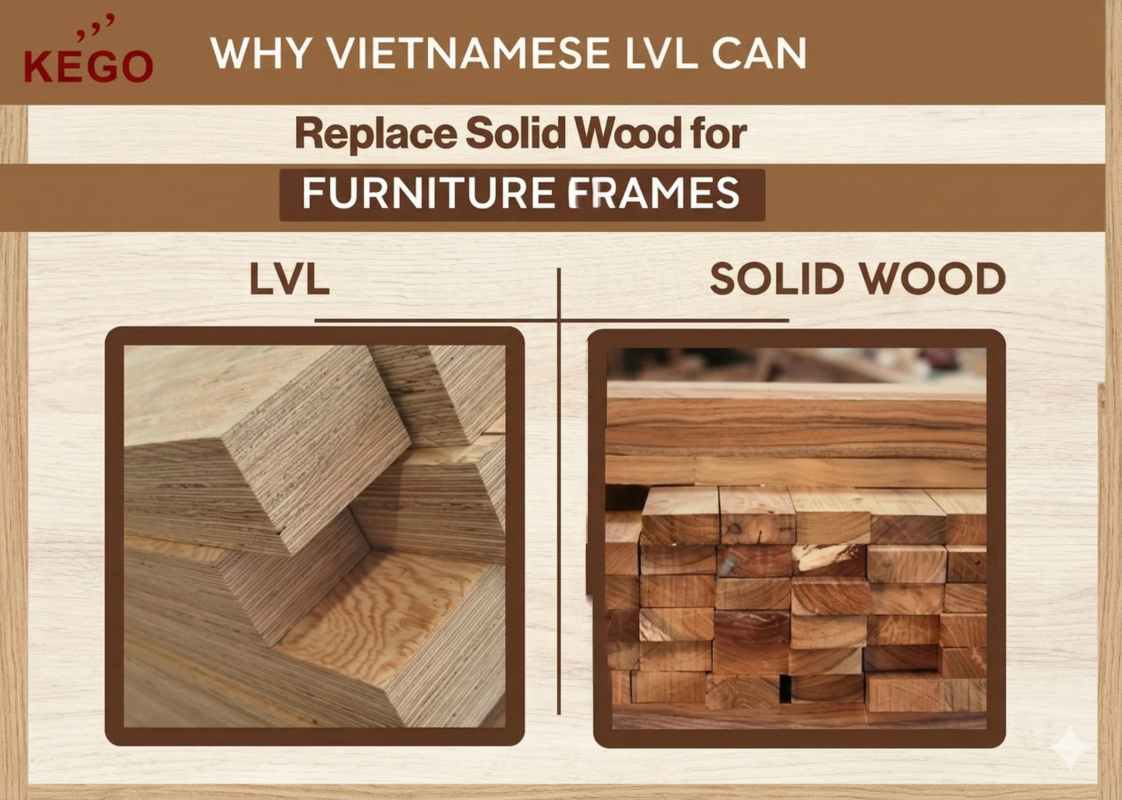
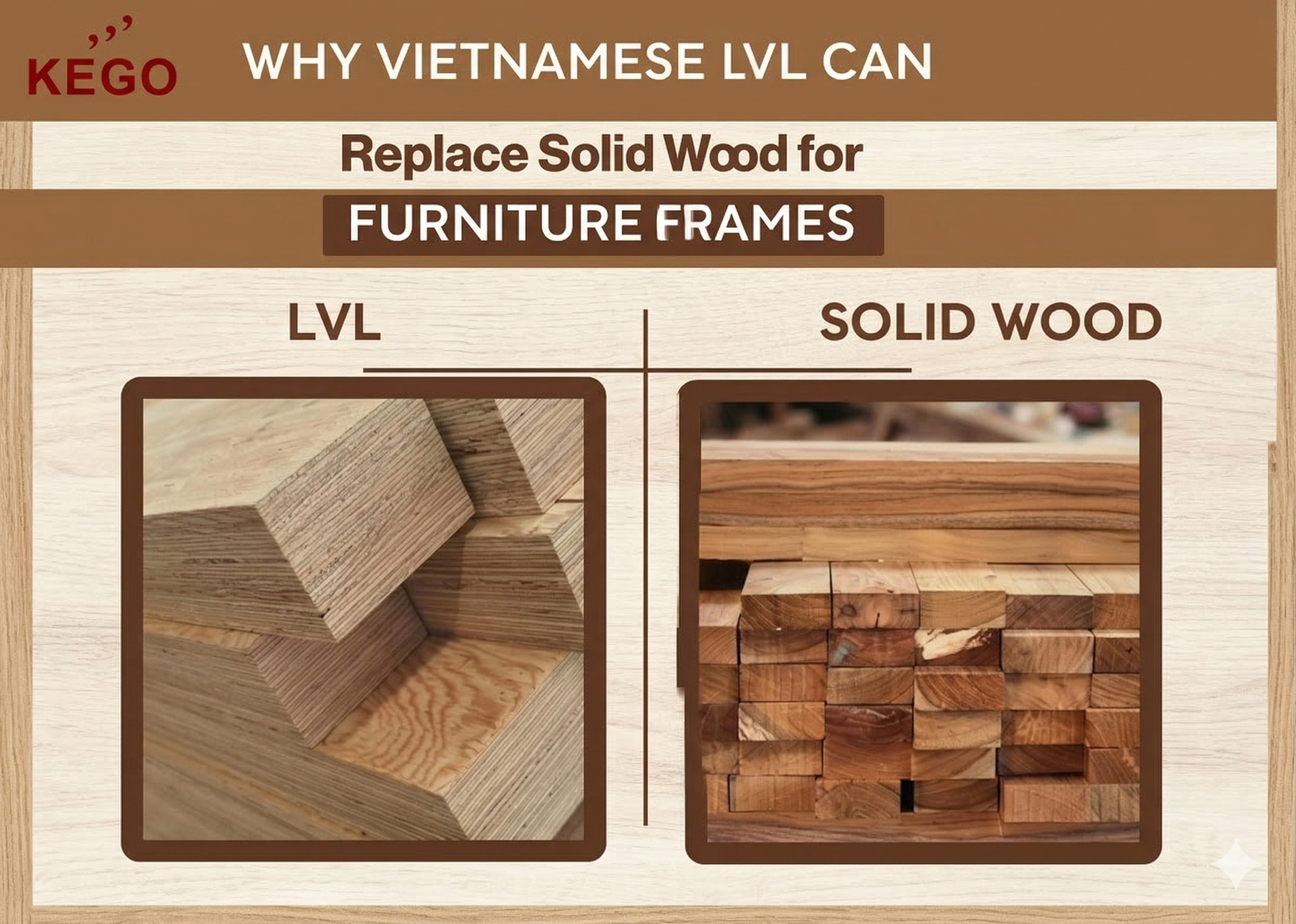
When it comes to structural materials, buyers often face a key decision: choosing between LVL and solid wood. While traditional timber has been used for decades, LVL is quickly becoming the preferred option in many industries thanks to its consistency and reliability.
In this article, we’ll break down the real differences between these two materials and help you decide which one performs better for your application.
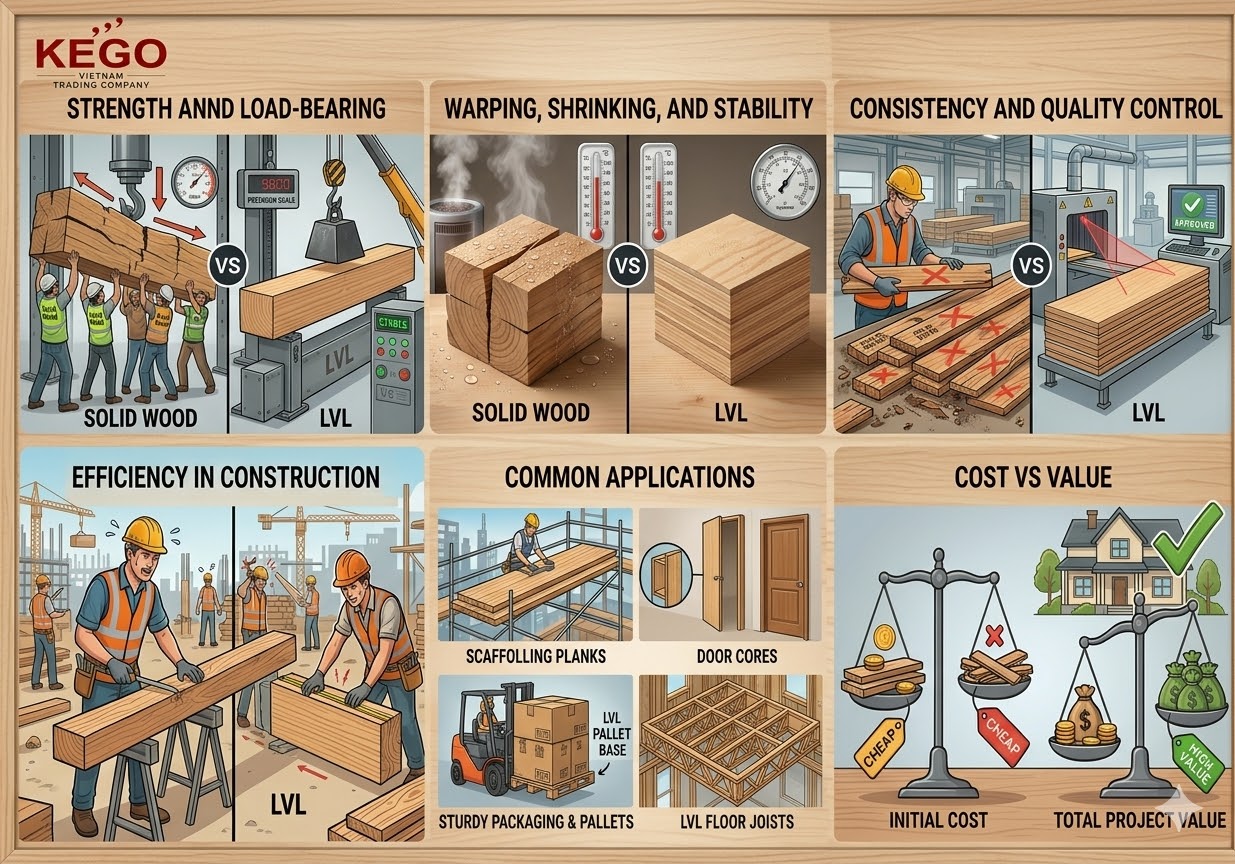
1. Strength and Load-Bearing Performance
One of the most important factors in structural applications is strength.
LVL offers a more uniform strength profile because it is manufactured under controlled conditions. Each layer is bonded together in the same grain direction, allowing it to handle loads more consistently across the entire length.
In contrast, solid wood varies significantly depending on the species, age of the tree, and natural defects such as knots. This means that even within the same batch, strength can be unpredictable
=> LVL provides more reliable load-bearing performance, especially for projects requiring precise calculations.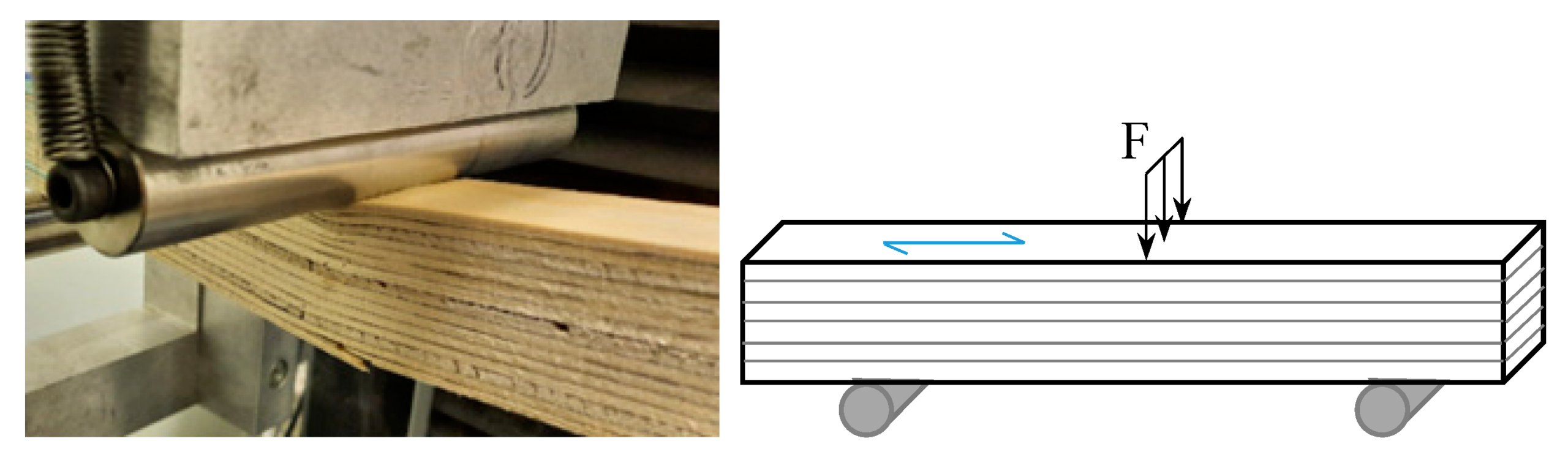
2. Warping, Shrinking, and Stability
Solid wood is highly sensitive to moisture and environmental conditions. Over time, it can warp, twist, shrink, or crack, especially in humid or changing climates.
LVL, on the other hand, is engineered to minimize these issues. Its layered structure reduces internal stress, making it far more dimensionally stable.
=>If your project requires long-term stability, LVL is a safer choice
3. Consistency and Quality Control
Consistency is critical for large-scale projects and imports.
With LVL, manufacturers can control thickness, density, and bonding quality throughout the production process. This ensures that every piece meets the same specifications.
Solid wood does not offer this level of control. Variations in grain and natural defects can lead to inconsistent quality, which increases the risk during installation or use.
=> LVL ensures uniform quality, while solid wood carries natural variability.
4. Efficiency in Construction and Manufacturing
Time and efficiency are major concerns for contractors and importers.
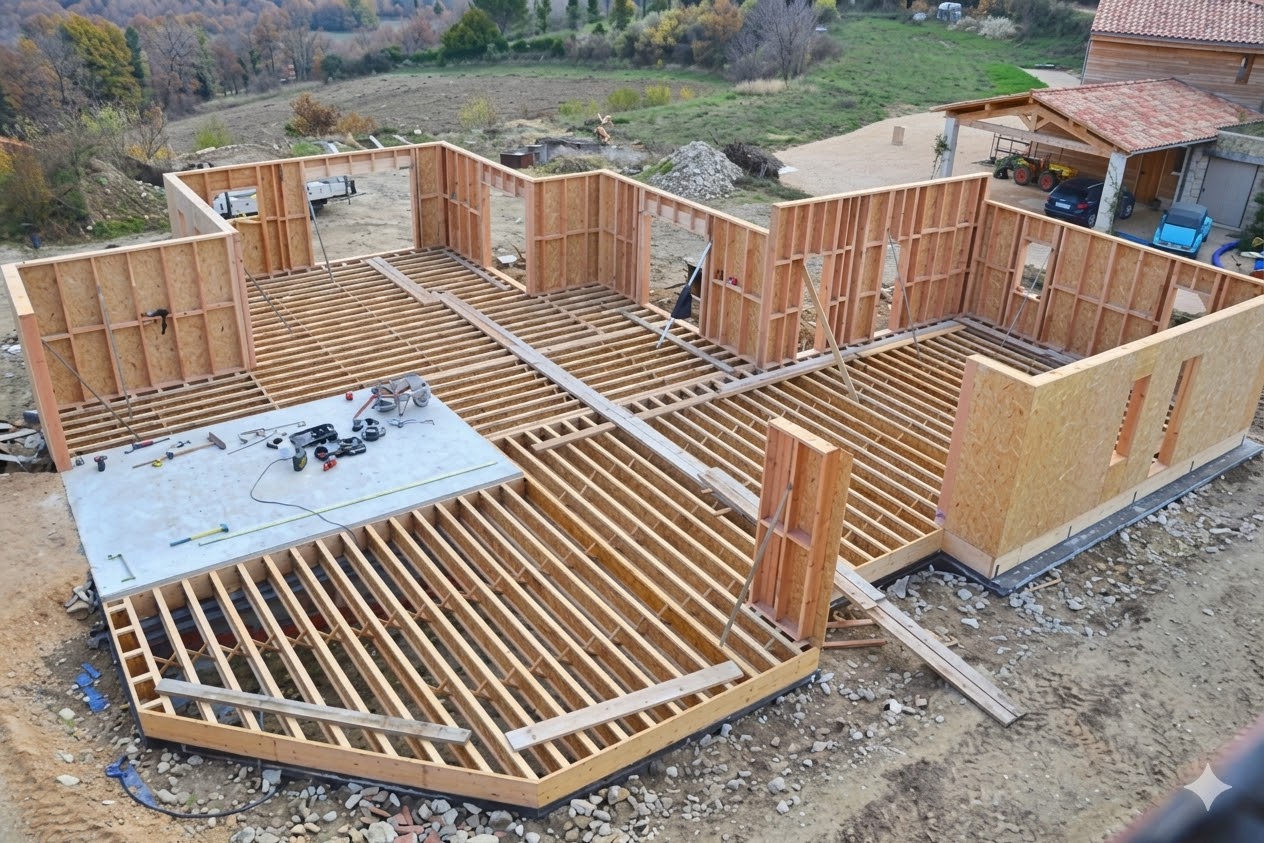
LVL reduces the need for sorting and grading on-site because of its consistent properties. It is easier to cut, install, and calculate in engineering designs.
Solid wood often requires additional inspection and selection, which can slow down the process and increase labor costs.
=> LVL improves workflow efficiency and reduces on-site uncertainty.
5. Common Applications Where LVL Outperforms Solid Wood
LVL is widely used in industries where performance and consistency are essential:
-
Scaffolding planks
-
Door cores
-
Packaging and pallets
-
Construction beams and supports
In these applications, even small inconsistencies can lead to safety risks or financial loss. That’s why many buyers are switching from solid wood to LVL.
6. Cost vs Value: What Buyers Should Consider
At first glance, solid wood may appear to be the cheaper option. However, the real cost goes beyond the initial price.
With solid wood, buyers may face:
-
Higher waste due to defects
-
Increased labor costs for sorting
-
Risk of failure or replacement
LVL may have a slightly higher upfront cost, but it delivers better long-term value through reliability and reduced risk.
=> LVL is often more cost-effective when considering total project performance.
Conclusion
Choosing between LVL and solid wood depends on your priorities. If you value consistency, stability, and predictable performance, LVL is clearly the better option for structural applications.
As more industries shift toward engineered materials, LVL continues to prove itself as a reliable alternative to traditional timber.
𝐊𝐞 𝐆𝐨 𝐂𝐨𝐦𝐩𝐚𝐧𝐲 𝐋𝐢𝐦𝐢𝐭𝐞𝐝
If you require any further information, feel free to contact me:
Whatsapp/Wechat/Zalo: +84 965 615 346 (Ms. Sue)
Email: sales3@kego.com.vn