

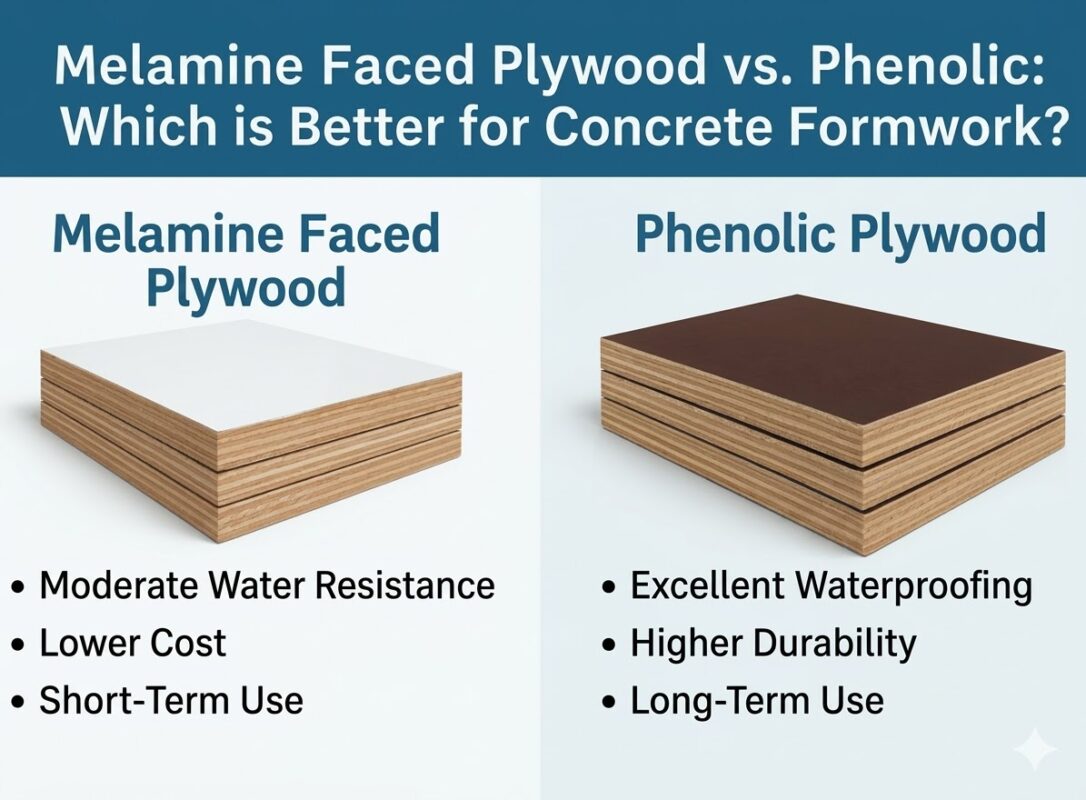
Film faced plywood is a type of plywood coated with a protective film layer, usually phenolic or melamine film, on both sides of the panel. This coating improves the board’s water resistance, durability, and surface smoothness.
Because of these advantages, film faced plywood is widely used in applications such as:
-
Concrete formwork
-
Construction projects
-
Scaffolding platforms
-
Vehicle or trailer flooring
-
Outdoor structural work
The quality of film faced plywood depends on several key technical factors, which buyers should carefully evaluate before purchasing
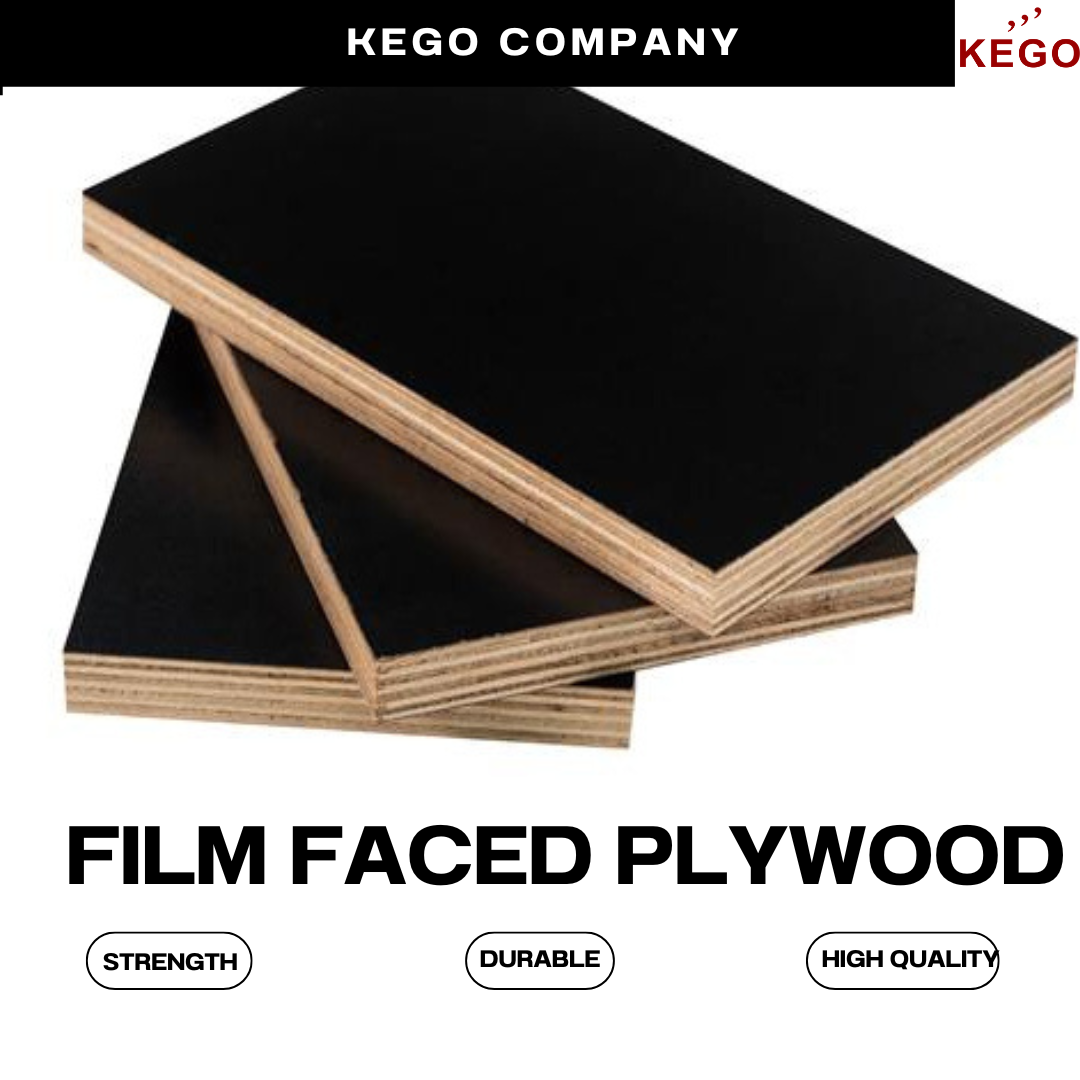
1. Core Veneer – The Structural Strength of Plywood
The core veneer is the internal layer of plywood and plays a crucial role in determining the strength, durability, and stability of the panel.
Acacia Core
Acacia veneer is commonly used in Southeast Asian plywood production. It offers:
-
Good strength and hardness
-
Stable structure with moderate density
-
Cost-effective solution for construction plywood
Acacia core plywood is widely used for film faced plywood in concrete formwork.
Mixed Hardwood Core
Manufacturers combine different hardwood species to produce mixed hardwood core
Advantages include:
-
Higher density compared with softwood cores
-
Good load-bearing performance
-
Improved durability in heavy construction applications
Mixed hardwood core plywood is often preferred for projects requiring higher strength and longer reuse cycles
Eucalyptus Core
Eucalyptus is a fast-growing hardwood species widely used in plywood manufacturing.
Main characteristics include:
-
Higher density and strength compared with many plantation woods
-
Good resistance to bending and heavy loads
-
Suitable for demanding construction applications
Eucalyptus core plywood is often selected when higher structural strength and durability are required.
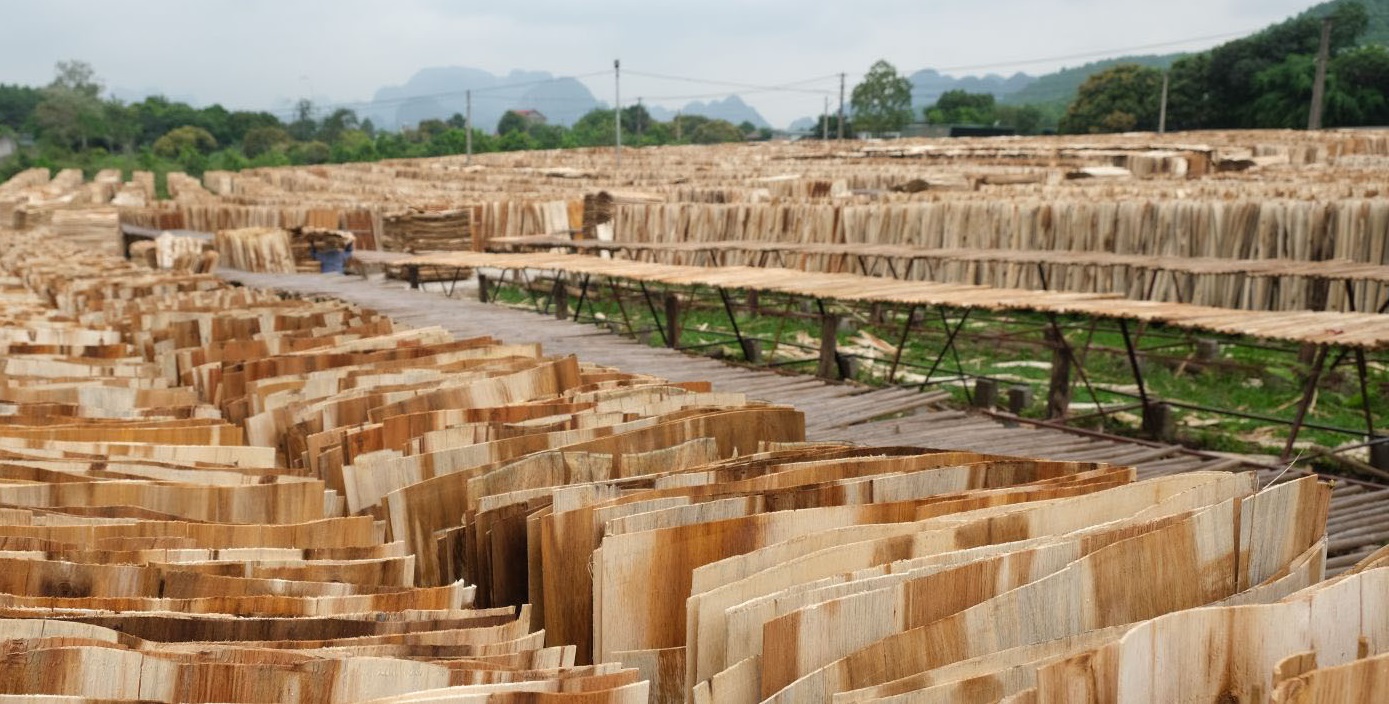
2. Surface Types
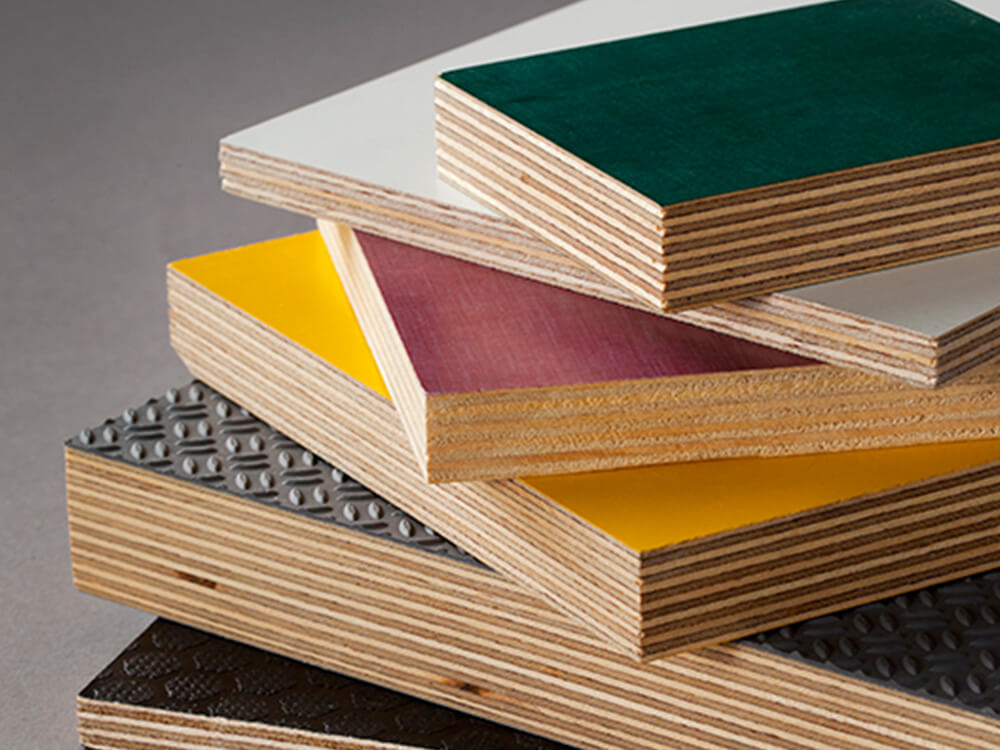
Film faced plywood can have different surface patterns depending on its application.
Smooth Film Faced Plywood
-
Used for concrete formwork
-
Creates smooth concrete surfaces
Textured Film Faced Plywood
-
Decorative or architectural applications
Anti-Slip Film Faced Plywood
-
Designed for safety
-
Commonly used in truck flooring, container flooring, and construction platforms
3. Density and Strength
The density of plywood affects its load-bearing capacity and durability.
Typical density ranges include:
-
Acacia core: approximately 600–610 kg/m³
-
Mixed hardwood core: approximately 610–630 kg/m³
- Eucalyptus core: approximately 650–670 kg/m³
Higher density generally means:
-
Stronger panels
-
Better resistance to bending and impact
4. Glue Type
Glue quality is critical for determining the plywood’s resistance to water and weather conditions.
Common glue types include:
WBP Phenolic Glue
-
Boiling waterproof performance
-
Ideal for outdoor construction and concrete formwork
Melamine Glue
-
Moderate water resistance
-
Suitable for indoor or light-duty applications
High-quality film faced plywood should be able to withstand boiling water tests without delamination

5. Reusability in Construction
One of the main advantages of film faced plywood is its reusability in concrete formwork.
Depending on the quality of film, glue, and core material, film faced plywood can typically be reused:
-
1-2, 4-6, 8–10 times for standard quality boards depend % melamine: 5%, 7%, 10%, 15%,…
-
15–25 times or more for high-quality plywood with phenolic film and hardwood core
Proper handling, cleaning, and storage can significantly extend the lifespan of the panels.
Conclusion
Selecting the right film faced plywood requires understanding several technical factors, including core veneer, film type, glue quality, density, and surface finishing.
High-quality plywood not only improves construction efficiency but also reduces overall project costs through better durability and multiple reuse cycles
𝐊𝐞 𝐆𝐨 𝐂𝐨𝐦𝐩𝐚𝐧𝐲 𝐋𝐢𝐦𝐢𝐭𝐞𝐝
If you require any further information, feel free to contact me:
Whatsapp/Wechat/Zalo: +84 965 615 346 (Ms. Sue)
Email: sales3@kego.com.vn






Share our link, earn real money—signup for our affiliate program!
Thank you for your interest and for getting in touch. Should you have any requirements regarding plywood products, please feel free to contact us for further assistance.
Ke Go Company Limited
For technical enquiries or quotations, please contact:
WhatsApp / WeChat / Zalo: +84 965 615 346 (Ms. Sue)
Email: sales3@kego.com.vn
Join our affiliate program and watch your earnings skyrocket—sign up now!
Thank you for your interest and for getting in touch. Should you have any requirements regarding plywood products, please feel free to contact us for further assistance.
Ke Go Company Limited
For technical enquiries or quotations, please contact:
WhatsApp / WeChat / Zalo: +84 965 615 346 (Ms. Sue)
Email: sales3@kego.com.vn
Promote our brand and get paid—enroll in our affiliate program!
Thank you for your interest and for getting in touch. Should you have any requirements regarding plywood products, please feel free to contact us for further assistance.
Ke Go Company Limited
For technical enquiries or quotations, please contact:
WhatsApp / WeChat / Zalo: +84 965 615 346 (Ms. Sue)
Email: sales3@kego.com.vn